
IP address
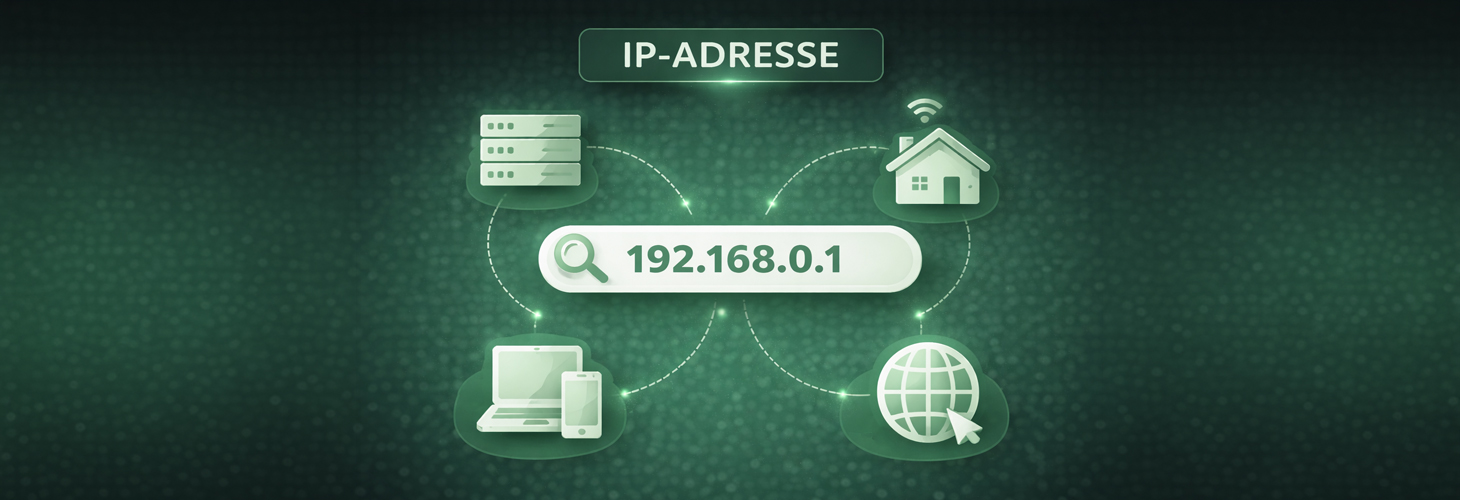
For seamless information exchange in a data network – among computers – the unique identification of sender and recipient is important. For exchange between computers and on the Internet, the so-called IP address is used, which is newly assigned for each device and every domain on the World Wide Web. An address must be assigned only once for each device in a network. There is a distinction between static and dynamic addressing. Devices, servers, and websites receive a static IP address, for example, so they can always be reached under the same URL. To allow internet users to reach websites, they are accessible in connection with the Domain Name System (DNS) via URLs. This means that no one has to remember the combinations of numbers. Web users or the router or modem are assigned dynamic IP addresses, ensuring they receive a new one each time. Usually, the IP address of the router changes within a certain period, often within 24 hours. For private users, the IP address, whether dynamic or static, does not affect surfing the web. However, the advantage of a dynamic IP address is the protection of privacy. This is because the changes make it impossible to assign internet surfing behavior to a single person over a long period – days, weeks, months.
Structure of an IP address
An IP address consists of the network ID and a host ID. There are also two different standards according to which IP addresses are structured. The IPv4 standard consists of four numbers from 0 to 255, each separated by a dot. This can look as follows: 191.232.47.1. Since the possibilities of this method are eventually exhausted, the IPv6 standard was developed, according to which an IP address in a network consists of eight packages of numbers and letters. For simplified representation, packages of zeros can be shortened with a colon.
Information about the internet user
Binary codes are fundamentally not assigned to any country, so 80-blocks are only allocated in Germany. However, individual number blocks are assigned to internet providers, larger companies, and authorities. Since providers distribute IP addresses to their users, it is possible to determine which network user uses which provider. Furthermore, the internet dial-in account can determine where the user or device is located. Coverage with dial-in accounts is usually very good in cities, so location determination works better here than in rural areas, where there are fewer dial-in points.
Theoretically, the internet provider can provide information about which pages are visited during an internet session or what data is downloaded from the web. However, German legislation does not allow this information to be stored. Therefore, all session history data must be deleted once the session has ended.